
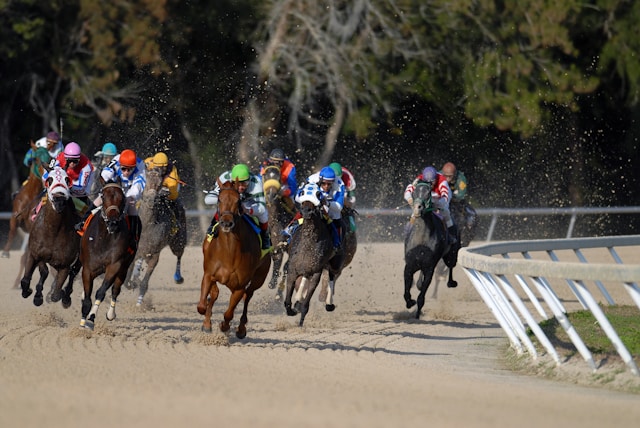
 The Kentucky Derby remains one of the most closely followed horse racing events in the world, drawing global attention each spring. As the first leg of the Triple Crown, it provides a unique blend of tradition, competition, and complexity that continues to captivate racing enthusiasts.
With a large field, evolving form lines, and weather-dependent track conditions, the Derby demands careful evaluation of multiple factors before any betting decisions are made.
Understanding how the race is structured, how horses qualify, and how performance indicators translate to Churchill Downs can provide essential context when analyzing contenders for this iconic event.
Understanding the Kentucky Derby Format and Field Size
The Kentucky Derby stands apart from most major races due to its maximum field size of 20 horses, creating a uniquely challenging environment for both competitors and analysts.
Unlike smaller stakes races, where pace and positioning are easier to predict, the Derby’s crowded field introduces layers of uncertainty that can reshape outcomes quickly. Traffic congestion, wide trips, and split-second decisions by jockeys all become amplified under these conditions.
The starting gate draw plays a significant role in shaping race strategy. Horses breaking from inside posts may encounter early pressure, while those drawn wide must navigate longer paths into the first turn. These positioning factors directly influence how the race unfolds.
Understanding how the Kentucky Derby at Churchill Downs operates within this structure is essential when assessing contenders. As pace scenarios become more complex, multiple front-runners may vie for early control, while closers must find clear running lanes. This dynamic environment reinforces the importance of evaluating how each horse is likely to handle the demands of a full field.
How the Road to the Derby Points System Works
The points system used to qualify for the Derby determines which horses earn a place in the starting gate, replacing earlier qualification methods with a more structured approach.
Horses accumulate points through a series of designated prep races, with higher-value events offering increased rewards as the Derby approaches. These races serve as a proving ground, helping to identify which three-year-olds are ready for the demands of the main event.
Points totals provide valuable insight into a horse’s consistency and level of competition faced throughout the season. A strong points tally often reflects repeated success in graded stakes races, indicating both ability and readiness. Conversely, horses that qualify with fewer points may have to rely on standout performances in key races rather than sustained form.
Tracking how a horse has earned its points offers context beyond simple statistics. It reveals patterns in performance, adaptability to different tracks, and progression over time. This deeper understanding helps shape a clearer picture of the overall strength of the Derby field.
Why Track Conditions and Distance Matter
Churchill Downs presents a racing surface that can vary significantly depending on weather conditions, making track analysis a critical part of Derby evaluation. A fast track typically favors horses with early speed, while a wet or muddy surface can introduce unexpected variables that shift the competitive balance. Horses with proven adaptability to different conditions often attract attention when forecasts suggest changing weather.
The Derby’s 1¼-mile distance further distinguishes it from most prep races, which are often run at shorter distances. This added length places a premium on stamina, requiring horses to maintain their performance over a demanding stretch. Not all contenders are equally suited to this test, making prior experience at longer distances a key consideration.
Evaluating how horses perform across varying track conditions and distances provides meaningful insight into their potential. Those who have demonstrated both endurance and adaptability are often better positioned to handle the unique challenges presented by Churchill Downs on Derby day.
Reading Past Performances and Key Racing Metrics
Analyzing past performances is a fundamental step in evaluating Kentucky Derby contenders. Detailed race records provide insight into how each horse has performed against varying levels of opposition and under different conditions. By reviewing these performances, bettors can identify patterns that reveal strengths and potential limitations.
Speed figures are among the most commonly referenced metrics, offering a standardized way to compare performances across races. Pace ratings help illustrate how a horse distributes its energy throughout a race, while finishing times can indicate the ability to sustain momentum in the final stretch. These data points collectively contribute to a deeper understanding of a horse’s capabilities.
Recent workouts also play an important role in assessing readiness. Strong training performances leading up to the Derby can signal fitness and preparation. Additionally, evaluating how a horse has performed against high-quality competition helps determine whether it is equipped to handle the intensity of the Derby field, where margins between contenders often narrow.
Exploring the Most Popular Kentucky Derby Bet Types
The Kentucky Derby offers a wide range of betting options, each requiring a different level of precision when selecting horses. The simplest wagers include win, place, and show bets, which focus on a horse finishing first, within the top two, or within the top three. These options provide a straightforward way to engage with the race.
More complex wagers, such as exacta, trifecta, and superfecta bets, involve predicting the exact order of finish among multiple horses. The size of the Derby field heavily influences these bet types, as a larger field increases the number of possible outcomes.
Understanding how each bet type works is essential when evaluating the race. The structure of the Derby encourages bettors to consider multiple scenarios, especially given the unpredictable nature of a 20-horse field. By recognizing how different wagers align with race dynamics, bettors can approach the Derby with a clearer perspective on how selections interact within the broader field.
Understanding a Dynamic Landscape
The Kentucky Derby presents a complex and dynamic betting landscape shaped by its large field, qualification system, and demanding race conditions.
By understanding the race structure, the points system, and the importance of track conditions and distance, bettors can develop a more informed perspective when evaluating contenders.
Careful analysis of past performances and familiarity with different wager types further enhance this understanding. As the Derby continues to capture global attention, these core variables remain essential in interpreting how the race may unfold and how each horse fits within the broader competitive picture.