2026

Royal Ascot’s Gold Cup: the most recent winners

Run over two miles, three furlongs and 210 yards on the third day of Royal Ascot, the Gold Cup has been the centrepiece of British staying flat racing since 1807. The names on its roll of honour over the past five years cover multiple champions, fairytale send-offs, and one of the most compelling rivalries the division has seen in years. You can check the odds for today’s racecards to see which horses are building towards the next renewal.

The race rewards horses who can sustain a high cruising speed over a distance that few can manage at Group 1 level. Here are the five horses who have done exactly that since 2021.


Subjectivist (2021)

Trained by Mark Johnston and ridden by Joe Fanning, Subjectivist produced one of the more authoritative Gold Cup displays in recent years when he powered five lengths clear of Princess Zoe on good to firm ground. The four-year-old son of Teofilo had already won the Prix Royal-Oak at Longchamp the previous autumn, and his Gold Cup win was marked by a front-running display that left the field with no answer.

Stradivarius, bidding for a record-equalling fourth Gold Cup win, was caught in traffic and finished fourth. In different circumstances, that race might have ended differently, but Subjectivist had earned his victory. A tendon injury sustained shortly afterwards cut short what looked set to be a long reign in the staying division.


Kyprios (2022)

Aidan O’Brien had long believed Kyprios was capable of winning a Gold Cup, and the four-year-old made it look straightforward at 13/8 favourite. Ryan Moore tracked the pace in midfield before moving through to win by half a length from Mojo Star, with Stradivarius again finishing third after meeting traffic. It was not as smooth as the margin suggests, but Moore had the race under control throughout the closing stages.

O’Brien described it as a masterful ride. Kyprios left Ascot with the Gold Cup and an expectation that he would return.


Courage Mon Ami (2023)

Few Gold Cups have produced a story quite like this one. Courage Mon Ami, a son of Frankel trained by John and Thady Gosden, had run just four times in his career when he lined up for the Gold Cup. He had won all three previous starts, but none of them came anywhere close to this level. Frankie Dettori, in his final year of race riding, settled him at the back of the field and threaded up the rail before switching outside the leader in the closing stages.

He beat Coltrane by three-quarters of a length. Dettori, who had won the race nine times in total, saluted the crowd as he crossed the line.


Kyprios (2024)

Kyprios returned for a second Gold Cup after injury had kept him away for most of 2023. He arrived at Ascot having posted back-to-back wins at Listed and Group 3 level in Ireland, and in a race where Coltrane caused a surprise by leading home the market on his way to a shock 10/1 victory in the early stages, it was Kyprios who produced the decisive move when it counted.

He won by a length from Coltrane, becoming only the third horse in Gold Cup history to recapture the title. It was O’Brien’s ninth victory in the race, a record, and Moore’s fourth.


Trawlerman (2025)

John and Thady Gosden’s Trawlerman had spent much of the previous two years finishing behind Kyprios. With the Ballydoyle horse absent in 2025, he came to Royal Ascot as the horse most likely to go on and win, and he did not disappoint. William Buick let him find his own rhythm in front, and he simply kept finding all the way to the line, winning from Illinois and Dubai Future. It was a fifth Gold Cup victory for Gosden, completing a run of five renewals dominated by two yards and a small number of exceptional stayers.
 

2026 Grand National Result

Run on good to soft going on Saturday, April 11, 2026, the 2026 Grand National featured 34 runners, the maximum number possible since the latest safety changes implemented by Aintree and its owner, The Jockey Club, in 2024, of which 16 completed the course. County Carlow trainer Willie Mullins, who won the Grand National with I Am Maximus in 2024 and Nick Rockett in 2025, saddled no fewer than eight runners, headed, once again, by I Am Maximus, who sought to become the first horse since Red Rum to recapture the Grand National, having finished runner-up to his stable companion in 2025.

Indeed, I Am Maximus was the subject of a wholesale gamble beforehand, forcing his starting price into 9/2 favourite, ahead of the Coral Gold Cup winner Panic Attack, at 7/1, Ultima Handicap Chase runner-up Jagwar, at 17/2, and stable companion Grangeclare West, third in the 2025 Grand National, at 9/1. The latter was an early casualty, unseating Patrick Mullins at the very first fence, while Panic Attack was badly hampered by the fall of the Mullins-trained Quai De Bourbon at the second fence before falling herself at the third. Jagwar fared a little better, but he, too, unseated Mark Walsh after a mistake at the first open ditch on the second circuit.

At the business end of the race, Jordans, trained by Joseph Patrick O’Brien and ridden by Ben Jones, opened up a clear lead on the turn for home and remained at the head of affairs until just after the Elbow, halfway up the run-in. At that point, he was joined and passed by I Am Maximus, who, despite top weight of 11st 12lb, stayed on well in closing stages to win by two-and-a-half lengths. Iroko took second close home, with Jordans third and Johnnywho fourth, all within just over four lengths behind the winner. I Am Maximus, Iroko and Johnnywho all bore the famous green and gold silks of leading owner John Patrick ‘J.P.’ McManus. The result was less than well received by the leading bookmakers, with Fred Done, of Betfred fame, saying, “It’s been a gladiatorial bloodbath for us bookies.”

Technology’s Role in the Grand National

The Grand National is one of the most notable horse races on the calendar, taking place each year in April. The race will take place at the end of three days of racing at Aintree Racecourse in Merseyside. It provides a great climax to the racing and is undoubtedly the highlight of the races, with the largest prize pool and the highest-quality horses competing. The Grand National is the pinnacle of steeplechase racing, in part due to its incredible history. Though its history and traditions remain at its core, in recent times, technology has been implemented to elevate the racing. From improving accessibility to enhancing safety, technology has elevated the sport as a whole, and in this article, we will explore its impact.
Pre-Technology Grand National

Prior to technological developments, the Grand National was much simpler and less accessible to the public. Horse racing enthusiasts who looked to watch the racing live at these times would have to pay for a ticket and travel to Aintree Racecourse. The limitations of the Grand National meant it was available to a select group who either lived close to the course or could afford to travel and buy a ticket.


In addition to the Grand National’s lesser accessibility in these times, the sport had not yet implemented its elevated safety measures. The sport as a whole was more dangerous for horses and jockeys, but as technology developed over time, it has evolved. At the time, the Grand National was raced on pure grass and dirt before the advent of synthetic horse-racing surfaces.


Veterinary services were less accurate before technological advances, which have also affected horse safety. At the time, there were fewer devices available to vets, meaning injuries could not be detected at earlier stages, and potential complications worsened.

Growth in Data Analytics

Data analytics has played a huge role in the growth of horse racing as a whole, and specifically in the growth of the Grand National. Modern-day data insights are complex, with multiple data forms that professionals can analyse to make more informed wagers on the racing. Data analytics has also helped fans better understand the sport, with records showcasing horses’ form, distances won, and stamina.


Similar analytical tools are now widely discussed across the sport more generally, including when comparing major events and reviewing the odds on the Royal Ascot alongside other high-profile meetings on the racing calendar.


In preparation for the Grand National, data analytics is incredibly important in training the horses, with a range of valuable data that can be helpful. Training plans can be adjusted based on data gathered from previous races, thereby improving horse performance. Trainers can track stride length, jumping height, and heart rate, among others, which can be incredibly important for training schedules.

Wearable Technology

Lately, wearable technology has emerged and can be placed on a horse’s saddle or on a jockey. These wearable devices help trainers gather valuable data that can benefit the horses in their training. Lightweight sensors can be attached to gather the horse’s heart rate, speed, stride length, and other metrics that can help trainers analyse horse performance. In a demanding race such as the Grand National, these wearable devices provide valuable data regarding the speeds and distances the horses are operating at. The Grand National is a longer race than most, often making this data imperative for trainers to ensure their horses do not tire before the final straight. If trainers track horses’ data regularly, they can compare it, potentially identifying small changes in the horses’ condition.

Camera Technology

In the modern Grand National, technological camera systems have been implemented to elevate the overall experience of the race. The race has become free to watch on some television channels, which use multiple camera angles to capture all the action. In the modern era, advanced technological drones with cameras attached have been crafted. These camera drones have been implemented at the Grand National to get a view from above the racing.


Prior to the advances in technology, the outcome of races in the Grand National was down strictly to the naked eye. With large groups of horses racing, commonly the races would be highly contested, going down to the final seconds in a dramatic finish. With these closely contested races, the ending was often up for debate, with judges determining the result based on their own eyesight. Technology has allowed for the creation of cameras that capture multiple photos in short bursts to determine the result of these races. This is known as the ‘photo-finish’, which has helped decide numerous horse races around the world, including the Grand National.

Final Thoughts

Technology has played an incredible role in the evolution of the world, contributing to numerous sports. Horse racing is no exception, with technology evolving the sport as a whole, while maintaining its traditions at its core. Technology has played an incredible role in the sport’s safety, improving the track’s surface and making it more durable in worse conditions. Additionally, safety has been improved through data analytics, with metrics such as heart rate and stamina being trackable through wearable devices. With the gathering of this valuable data, trainers can use it to improve the safety of the horses.

Core Factors to Understand Before Betting on the Kentucky Derby

The Kentucky Derby remains one of the most closely followed horse racing events in the world, drawing global attention each spring. As the first leg of the Triple Crown, it provides a unique blend of tradition, competition, and complexity that continues to captivate racing enthusiasts.

With a large field, evolving form lines, and weather-dependent track conditions, the Derby demands careful evaluation of multiple factors before any betting decisions are made.

Understanding how the race is structured, how horses qualify, and how performance indicators translate to Churchill Downs can provide essential context when analyzing contenders for this iconic event.

Understanding the Kentucky Derby Format and Field Size

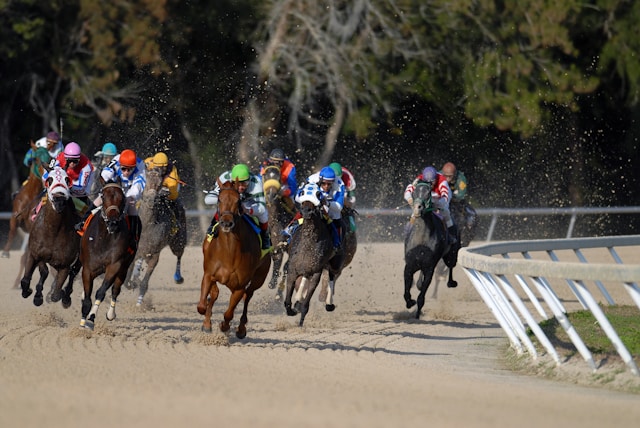
The Kentucky Derby stands apart from most major races due to its maximum field size of 20 horses, creating a uniquely challenging environment for both competitors and analysts.

Unlike smaller stakes races, where pace and positioning are easier to predict, the Derby’s crowded field introduces layers of uncertainty that can reshape outcomes quickly. Traffic congestion, wide trips, and split-second decisions by jockeys all become amplified under these conditions.

The starting gate draw plays a significant role in shaping race strategy. Horses breaking from inside posts may encounter early pressure, while those drawn wide must navigate longer paths into the first turn. These positioning factors directly influence how the race unfolds.

Understanding how the Kentucky Derby at Churchill Downs operates within this structure is essential when assessing contenders. As pace scenarios become more complex, multiple front-runners may vie for early control, while closers must find clear running lanes. This dynamic environment reinforces the importance of evaluating how each horse is likely to handle the demands of a full field.

How the Road to the Derby Points System Works

The points system used to qualify for the Derby determines which horses earn a place in the starting gate, replacing earlier qualification methods with a more structured approach.

Horses accumulate points through a series of designated prep races, with higher-value events offering increased rewards as the Derby approaches. These races serve as a proving ground, helping to identify which three-year-olds are ready for the demands of the main event.

Points totals provide valuable insight into a horse’s consistency and level of competition faced throughout the season. A strong points tally often reflects repeated success in graded stakes races, indicating both ability and readiness. Conversely, horses that qualify with fewer points may have to rely on standout performances in key races rather than sustained form.

Tracking how a horse has earned its points offers context beyond simple statistics. It reveals patterns in performance, adaptability to different tracks, and progression over time. This deeper understanding helps shape a clearer picture of the overall strength of the Derby field.

Why Track Conditions and Distance Matter

Churchill Downs presents a racing surface that can vary significantly depending on weather conditions, making track analysis a critical part of Derby evaluation. A fast track typically favors horses with early speed, while a wet or muddy surface can introduce unexpected variables that shift the competitive balance. Horses with proven adaptability to different conditions often attract attention when forecasts suggest changing weather.

The Derby’s 1¼-mile distance further distinguishes it from most prep races, which are often run at shorter distances. This added length places a premium on stamina, requiring horses to maintain their performance over a demanding stretch. Not all contenders are equally suited to this test, making prior experience at longer distances a key consideration.

Evaluating how horses perform across varying track conditions and distances provides meaningful insight into their potential. Those who have demonstrated both endurance and adaptability are often better positioned to handle the unique challenges presented by Churchill Downs on Derby day.

Reading Past Performances and Key Racing Metrics

Analyzing past performances is a fundamental step in evaluating Kentucky Derby contenders. Detailed race records provide insight into how each horse has performed against varying levels of opposition and under different conditions. By reviewing these performances, bettors can identify patterns that reveal strengths and potential limitations.

Speed figures are among the most commonly referenced metrics, offering a standardized way to compare performances across races. Pace ratings help illustrate how a horse distributes its energy throughout a race, while finishing times can indicate the ability to sustain momentum in the final stretch. These data points collectively contribute to a deeper understanding of a horse’s capabilities.

Recent workouts also play an important role in assessing readiness. Strong training performances leading up to the Derby can signal fitness and preparation. Additionally, evaluating how a horse has performed against high-quality competition helps determine whether it is equipped to handle the intensity of the Derby field, where margins between contenders often narrow.

Exploring the Most Popular Kentucky Derby Bet Types

The Kentucky Derby offers a wide range of betting options, each requiring a different level of precision when selecting horses. The simplest wagers include win, place, and show bets, which focus on a horse finishing first, within the top two, or within the top three. These options provide a straightforward way to engage with the race.

More complex wagers, such as exacta, trifecta, and superfecta bets, involve predicting the exact order of finish among multiple horses. The size of the Derby field heavily influences these bet types, as a larger field increases the number of possible outcomes.

Understanding how each bet type works is essential when evaluating the race. The structure of the Derby encourages bettors to consider multiple scenarios, especially given the unpredictable nature of a 20-horse field. By recognizing how different wagers align with race dynamics, bettors can approach the Derby with a clearer perspective on how selections interact within the broader field.

Understanding a Dynamic Landscape

The Kentucky Derby presents a complex and dynamic betting landscape shaped by its large field, qualification system, and demanding race conditions.

By understanding the race structure, the points system, and the importance of track conditions and distance, bettors can develop a more informed perspective when evaluating contenders.

Careful analysis of past performances and familiarity with different wager types further enhance this understanding. As the Derby continues to capture global attention, these core variables remain essential in interpreting how the race may unfold and how each horse fits within the broader competitive picture.