2026 Grand National Results – I Am Maximus Wins Again at Aintree
 Admin
Admin 2026 Grand National Results – I Am Maximus Wins Again at Aintree
| Pos | Horse | Age | SP | Jockey | Trainer | Owner |
|---|---|---|---|---|---|---|
| 1 | Nick Rockett | 8 | 33/1 | Patrick Mullins | Willie Mullins | Stewart & Sadie Andrew |
| 2 | I Am Maximus | 9 | 7/1 | Paul Townend | Willie Mullins | John P. McManus |
| 3 | Grangeclare West | 9 | 33/1 | Brian Hayes | Willie Mullins | Cheveley Park Stud |
| 4 | Iroko | 7 | 13/2F | Jonjo O’Neill Jr. | Oliver Greenall & Josh Guerriero | John P. McManus |
| 5 | Meetingofthewaters | 8 | 20/1 | Danny Mullins | Willie Mullins | John P. McManus |
| 6 | Senior Chief | 8 | 40/1 | Darragh O’Keeffe | Henry de Bromhead | Lucky In Life Syndicate |
| 7 | Minella Cocooner | 9 | 18/1 | Jonathan Burke | Willie Mullins | David Bobbett |
| 8 | Hewick | 10 | 14/1 | Gavin Sheehan | John Joseph Hanlon | T. J. McDonald |
| 9 | Minella Indo | 12 | 20/1 | Rachael Blackmore | Henry de Bromhead | Barry Maloney |
| 10 | Twig | 10 | 50/1 | Beau Morgan | Ben Pauling | Mrs G. Morgan |
| 11 | Three Card Brag | 8 | 16/1 | Sean Bowen | Gordon Elliott | Patrick & Scott Bryceland and the McNeill Family |
| 12 | Beauport | 9 | 33/1 | Sam Twiston-Davies | Nigel Twiston-Davies | Bryan & Philippa Burrough |
| 13 | Horantzau d’Airy | 8 | 150/1 | Ciaran Gethings | Michael Keady | Jim Gill |
| 14 | Vanillier | 10 | 12/1 | Sean Flanagan | Gavin Cromwell | Mrs H. M. Keaveney |
| 15 | Bravemansgame | 10 | 40/1 | James Reveley | Paul Nicholls | Bryan Drew |
| 16 | Chantry House | 11 | 66/1 | James Bowen | Nicky Henderson | John P. McManus |
Run on good to soft going on Saturday, April 11, 2026, the 2026 Grand National featured 34 runners, the maximum number possible since the latest safety changes implemented by Aintree and its owner, The Jockey Club, in 2024, of which 16 completed the course. County Carlow trainer Willie Mullins, who won the Grand National with I Am Maximus in 2024 and Nick Rockett in 2025, saddled no fewer than eight runners, headed, once again, by I Am Maximus, who sought to become the first horse since Red Rum to recapture the Grand National, having finished runner-up to his stable companion in 2025.
Indeed, I Am Maximus was the subject of a wholesale gamble beforehand, forcing his starting price into 9/2 favourite, ahead of the Coral Gold Cup winner Panic Attack, at 7/1, Ultima Handicap Chase runner-up Jagwar, at 17/2, and stable companion Grangeclare West, third in the 2025 Grand National, at 9/1. The latter was an early casualty, unseating Patrick Mullins at the very first fence, while Panic Attack was badly hampered by the fall of the Mullins-trained Quai De Bourbon at the second fence before falling herself at the third. Jagwar fared a little better, but he, too, unseated Mark Walsh after a mistake at the first open ditch on the second circuit.
At the business end of the race, Jordans, trained by Joseph Patrick O’Brien and ridden by Ben Jones, opened up a clear lead on the turn for home and remained at the head of affairs until just after the Elbow, halfway up the run-in. At that point, he was joined and passed by I Am Maximus, who, despite top weight of 11st 12lb, stayed on well in closing stages to win by two-and-a-half lengths. Iroko took second close home, with Jordans third and Johnnywho fourth, all within just over four lengths behind the winner. I Am Maximus, Iroko and Johnnywho all bore the famous green and gold silks of leading owner John Patrick ‘J.P.’ McManus. The result was less than well received by the leading bookmakers, with Fred Done, of Betfred fame, saying, “It’s been a gladiatorial bloodbath for us bookies.”
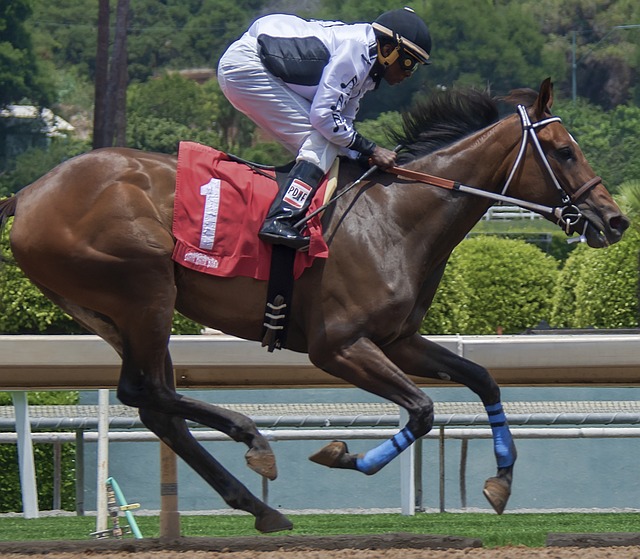 The Grand National is one of the most notable horse races on the calendar, taking place each year in April. The race will take place at the end of three days of racing at Aintree Racecourse in Merseyside. It provides a great climax to the racing and is undoubtedly the highlight of the races, with the largest prize pool and the highest-quality horses competing. The Grand National is the pinnacle of steeplechase racing, in part due to its incredible history. Though its history and traditions remain at its core, in recent times, technology has been implemented to elevate the racing. From improving accessibility to enhancing safety, technology has elevated the sport as a whole, and in this article, we will explore its impact.